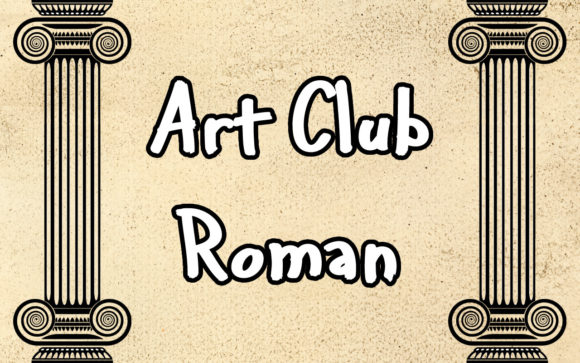
Art Club Roman: A Handwritten Font with Surprising Polish
There's a particular tension in design work that many professionals know well: the need for personality without sacrificing clarity. You want warmth, but not messiness. Character, but not chaos. It's this exact space where Art Club Roman operates with quiet confidence. Designed by Dathan Boardman, this creative handwritten font brings a human touch to projects while maintaining the kind of balanced structure that makes it genuinely useful across a wide range of applications.
At first glance, Art Club Roman reads as relaxed and approachable. The letterforms carry that unmistakable handwritten quality—slightly irregular strokes, natural rhythm, a sense that a real person put pen to paper. But spend a moment longer with it, and you'll notice something else happening. The characters are well-proportioned. The spacing feels considered. There's a clarity to each letter that prevents the design from tipping into illegibility. This isn't a font that tries too hard to look "authentic" or "artistic." It simply is both of those things, quietly and effectively.
Where Art Club Roman Actually Works
Handwritten fonts get dismissed sometimes, and honestly, some of them deserve it. Too many script fonts and casual typefaces sacrifice readability for flair, leaving designers frustrated when they try to use them in real projects. Art Club Roman sidesteps that problem. Because its characters are well-balanced and its overall personality leans toward clarity rather than ornamentation, it opens up a genuinely broad pool of design possibilities.
Think about brand identity work first. If you're building a brand for a boutique coffee roaster, a yoga studio, an independent bookstore, or a artisan bakery, you need a typeface that communicates warmth and individuality without looking amateurish. Art Club Roman fits that brief naturally. It works beautifully for logo design where you want the brand name to feel personal and inviting. Used at larger sizes, the handwritten details become a real asset, giving the logo an organic quality that serif fonts and sans serif fonts often struggle to achieve.
Packaging design is another area where this font shines. Picture a small-batch candle company or a handmade soap brand. The packaging needs to communicate craftsmanship and care. Art Club Roman brings that handmade sensibility without looking like someone just scribbled the label together. Its readability at moderate sizes means you can use it for product names, taglines, and even short descriptive text on labels and boxes.
For editorial design, the font works well as a display font for headlines, pull quotes, and chapter titles. It pairs surprisingly cleanly with more structured body text fonts, creating a visual contrast that draws readers in. If you're working on a cookbook, a lifestyle magazine, or a creative zine, Art Club Roman can add that editorial personality you're after.
Digital and Social Media Applications
Here's where things get practical for a lot of people reading this. Social media graphics demand fonts that are instantly readable at small sizes and visually distinctive enough to stop someone mid-scroll. Art Club Roman handles both of those demands well. Its handwritten character gives posts a personal, conversational feel—perfect for quotes, announcements, promotional graphics, and story overlays. It doesn't look generic the way so many default fonts do, which matters when you're competing for attention in a crowded feed.
For web design, the font works best in headline and accent roles rather than body copy. That's standard advice for any display font or creative font, and it applies here. Use Art Club Roman for hero section headlines, call-to-action buttons, or section headers where you want to inject personality. Pair it with a clean sans serif font for body text, and you get a layout that feels both professional and human.
Bloggers and content creators will find it particularly useful for branded graphics, Pinterest pins, and email headers. If your content strategy relies on visual consistency—and it should—having a distinctive premium font like Art Club Roman in your toolkit makes a real difference. It helps establish a recognizable look across platforms without requiring complex design skills.
How a Font Shapes Perception
This might sound like an overstatement, but the typeface you choose genuinely influences how people perceive your work. Typography is one of the first things a viewer processes, often before they've consciously read a single word. The right font builds trust. The wrong one creates doubt. Art Club Roman communicates approachability, creativity, and authenticity. It tells the viewer that the person or brand behind this design values individuality and craftsmanship.
That matters for small business owners who are building a brand identity from scratch. It matters for marketers who need their campaigns to feel relatable rather than corporate. And it matters for designers who want to deliver work that feels thoughtful and intentional. When you use a handwritten font like Art Club Roman in the right context, you're not just decorating text—you're shaping the emotional response of your audience.
Practical Tips for Using Art Club Roman
Before committing to any premium font for a project, test it properly. Set your actual headlines and key phrases in Art Club Roman, not just the alphabet. Look at how the characters interact with each other in the specific words you'll be using. Some handwritten fonts have letter combinations that create awkward spacing, but Art Club Roman's well-balanced design tends to handle real-world text gracefully.
Experiment with font pairing early in your process. Art Club Roman works well alongside geometric sans serif fonts for a modern contrast, or with simple serif fonts for a more grounded, editorial feel. Avoid pairing it with other decorative or script fonts—that combination almost always creates visual noise rather than harmony.
Check the included styles and weights before purchasing. Many commercial fonts come with multiple weights, alternates, or stylistic sets that give you more flexibility. Understanding what's included helps you plan your design system more effectively and get better value from your design assets.
Finally, consider your commercial licensing needs carefully. If you're using the font for client work, merchandise, or products for sale, make sure your license covers those applications. It's a detail that's easy to overlook but important to get right from the start.
Art Club Roman is the kind of font that doesn't demand attention—it earns it. Add it to your most creative ideas, and you'll notice how it makes them come alive with a warmth and clarity that feels genuinely intentional.