Vintage Western Font: A Designer’s Guide to Authentic Rustic Style
The Character Behind the Typeface
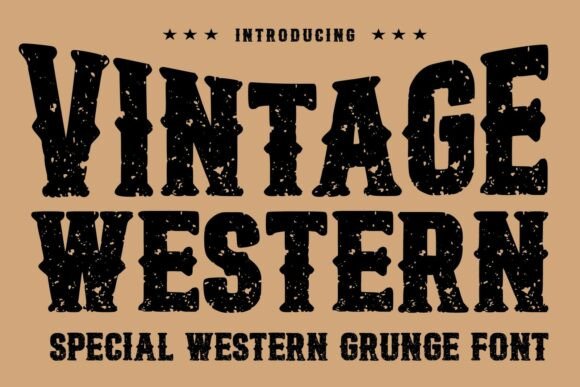
When you look at the Vintage Western Special Grunge Display Font, you aren’t just seeing letters; you are seeing history. This typeface is heavily inspired by the typography found on wanted posters, saloon signage, and early 19th-century newspaper headlines. It is a display font through and through, meaning it is designed to be the star of the show in large sizes rather than a background player in body text. The defining feature here is the slab-serif construction, characterized by thick, blocky feet on the ends of the strokes. This gives the font a grounded, sturdy, and immovable presence.
However, what separates Vintage Western from a standard block letter is the distressed grunge texture. The edges are worn and weathered, mimicking the look of ink pressed onto rough paper or paint chipping off an old wooden sign. This aesthetic instantly communicates ruggedness and authenticity. If your goal is to evoke a sense of the American frontier, hand-crafted quality, or a rebellious spirit, this creative font handles the heavy lifting for you. It avoids the sterility of modern typography by embracing imperfection, which is often exactly what a design needs to feel human.
Strategic Applications for Modern Projects
While the inspiration is historical, the application of Vintage Western is entirely modern. I see this font used most effectively in projects where the goal is to establish a strong, immediate brand identity. For entrepreneurs launching a barbecue sauce line, a craft brewery, or a rugged outdoor clothing brand, this typeface acts as a visual shorthand for tradition and durability. It tells the customer that the product is likely handmade or inspired by classic methods.
Here are some specific areas where this premium font shines:
- Packaging Design: On a bottle label or a coffee bag, the rugged texture of the font creates a tactile feel even on a flat surface. It suggests that the contents are robust and flavorful.
- Logo Design: A logo sets the tone for a business. Using Vintage Western for a steakhouse or a mechanic shop creates an instant connection with the target audience. It works best when kept relatively simple.
- Apparel and Merch: The grunge texture makes this ideal for t-shirt prints. It looks great on cotton and distressed fabrics because the font itself mimics the wear and tear of a favorite shirt.
- Editorial Design: If you are working on a magazine cover or a book jacket for a thriller or historical fiction, this font grabs attention. It creates a mood of tension or nostalgia immediately.
- Social Media Graphics: In a fast-scrolling environment, bold slab-serif fonts stop the thumb. Use it for headlines in Instagram posts or YouTube thumbnails to emphasize a strong statement.
Mastering Readability and Hierarchy
As a designer, it is crucial to understand the limitations and strengths of a display font like Vintage Western. Because of the distressed texture and bold weight, readability drops significantly at small sizes. If you try to use this for a paragraph of text, it will look like a blurry mess. Therefore, this font should strictly be used for headlines, sub-headlines, and short call-outs.
Visual hierarchy is about guiding the viewer's eye. Vintage Western naturally sits at the top of the pyramid. To make it work effectively, you need to pair it with something much quieter. Since Vintage Western is a serif font with high personality, it pairs exceptionally well with a clean sans-serif font for the body copy. Think of pairing the ruggedness of the west with the clean efficiency of modern geometry. A simple sans-serif font allows the headline to breathe and ensures that the overall design doesn't become overwhelming.
Avoid pairing it with other "loud" fonts, such as a complex script font or an aggressive handwritten font. The contrast should be between "loud" and "quiet," not "loud" and "louder." If you are working on a web design project, ensure the font is rendered correctly across different browsers, as heavy grunge textures can sometimes render differently on high-resolution screens compared to print.
Choosing and Evaluating Your Design Assets
Before integrating Vintage Western into your workflow, take a moment to evaluate if it fits the specific project's voice. Does the brand value heritage? Is the tone rugged, independent, or rebellious? If the answer is yes, you have a match. If the brand is trying to convey sleek minimalism or futuristic technology, this creative font will send mixed signals.
When you download a premium font like this, look closely at the character map. High-quality western fonts often include alternate characters, ligatures, or swashes that can make your logo design unique. Check if the font family includes different weights or styles—perhaps a "clean" version without the grunge for smaller text applications, or a bold version for extra punch.
Finally, consider the commercial licensing. Most professional design assets require a license upgrade if the end product is for sale or used in a large-scale commercial campaign. Always verify that your license covers the specific usage, whether it is for a local band poster or a nationwide packaging design rollout. By treating Vintage Western not just as a file, but as a strategic asset, you ensure that your designs maintain professionalism and legal safety while capturing that timeless, rugged allure.