Foodie Story: More Than Just a Handwritten Font
In a digital landscape crowded with sterile sans-serif fonts and overly formal serifs, finding a typeface that genuinely communicates personality is like finding a hidden gem in a crowded market. Foodie Story is that gem—a playful, hand-drawn typeface that doesn’t just sit on the page; it practically jumps off it. Designed with the warmth of a family kitchen and the boldness of a street food mural, this font is built for creators who want their work to feel approachable, authentic, and undeniably fun.
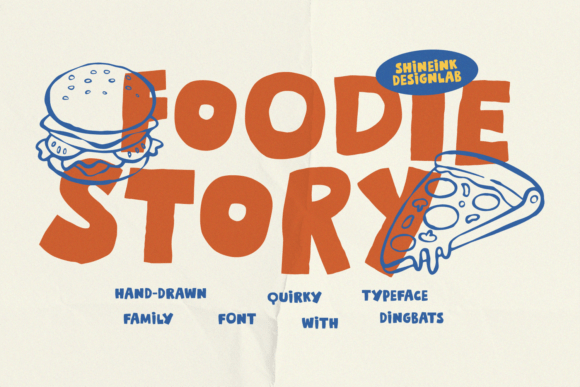
At its core, Foodie Story is a display font that leans heavily into the charm of imperfection. The letterforms are chunky and organic, with the subtle inconsistencies you’d expect from a hand-crafted doodle. This isn’t a script font that tries to mimic elegant calligraphy, nor is it a modern typography choice for corporate reports. It’s a handwritten font that embraces a raw, doodle-style aesthetic, making it instantly relatable. The visual weight of the characters ensures high impact, while the soft edges prevent it from feeling aggressive, striking a perfect balance for brand identity projects that need to be noticed without shouting.
Where Foodie Story Truly Shines
The versatility of this creative font extends far beyond its culinary name. While it is an obvious choice for a burger joint, a boutique pizza place, or a fun snack brand, its applications are surprisingly broad. For packaging design, Foodie Story offers a tactile quality that digital fonts often lack. It suggests that a product is handmade, artisanal, or crafted with care. Imagine it on a jar of local honey, a box of craft cookies, or a line of organic baby food—the font immediately sets expectations about the product’s personality.
In the realm of editorial design and web design, this typeface serves as a powerful tool for visual hierarchy. Use it for pull quotes, chapter titles, or blog headers to break the monotony of body text. It draws the reader’s eye exactly where you want it, creating focal points that enhance readability rather than hindering it. For social media graphics, where attention spans are short, the bold personality of Foodie Story helps posts stand out in a scrolling feed. It’s particularly effective for lifestyle bloggers, parenting content, and DIY crafters who want to convey a friendly, down-to-earth vibe.
Designing with Personality and Practicality
One of the standout features of Foodie Story is the included dingbats collection. These aren’t generic clip-art icons; they are hand-drawn food illustrations designed to pair seamlessly with the typeface. This integration is a massive time-saver for designers. You can quickly create playful compositions by mixing letters with icons—think a burger icon replacing the "o" in "Burger" or a coffee cup dotting an "i." This cohesion between text and imagery elevates a design from good to professional, showing a level of detail that clients and audiences appreciate.
When evaluating font pairing, Foodie Story plays well with others, provided you let it be the star. Because it is a premium font with such a distinct voice, it pairs best with clean, neutral typefaces. A simple sans serif font for body text provides the perfect counterbalance, ensuring your layout remains readable. Avoid pairing it with other handwritten fonts or ornate serif fonts, which can create visual clutter. The goal is contrast: let the bold, expressive nature of Foodie Story handle the headlines while a quiet companion manages the details.
Readability and Licensing Considerations
While Foodie Story is a bold choice, it’s designed with readability in mind. The consistent baseline and carefully crafted spacing ensure that words remain legible even at smaller sizes, though it truly excels at larger scales. Before committing to a full project, test the font in context. See how it looks on a mockup of a menu, a website hero image, or a t-shirt design. This testing phase is crucial for any design assets you incorporate into your workflow.
Finally, as with any commercial font, always review the licensing. Whether you are a small business owner creating your own logo design or a design agency working on client projects, ensure the license covers your intended use. Foodie Story offers the kind of professional polish and character that can significantly influence brand perception, making it a worthy investment for anyone looking to add a touch of warmth and authenticity to their creative toolkit.