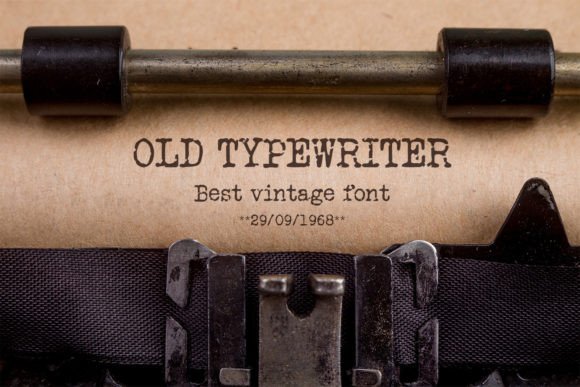
Old Typewriter: A Font with Character and History
There's something undeniably charming about the clack of typewriter keys and the impression they leave on paper. That specific texture, the slight imperfections, and the bold, mechanical presence carry a story. Old Typewriter is a creative font that captures this essence digitally. It's a slab serif with a distinct personality—think sturdy, slightly weathered letterforms that feel both nostalgic and authoritative. Unlike a clean, modern sans serif, this typeface has visible weight and texture in its strokes, mimicking the look of ink pressed onto paper by a metal typebar. It’s not trying to be perfect; it’s trying to be authentic.
This font's appeal lies in its ability to instantly set a mood. It’s a display font at heart, meaning it shines brightest in headlines, logos, and short bursts of text where its personality can take center stage. Using it for a 500-word body paragraph would be a challenge for readability, but as a title on a poster or the main text on a vintage-style t-shirt, it becomes a powerful design asset. Its aesthetic bridges the gap between the industrial and the personal, making it a versatile tool for designers and creators looking to add a layer of authenticity to their work.
Where Old Typewriter Truly Shines
Understanding where a font works is just as important as liking how it looks. Old Typewriter excels in projects where you want to evoke a specific era, a sense of craftsmanship, or a forensic, investigative vibe. Think about the title sequence of a mystery film, the masthead of an indie magazine, or the branding for a craft coffee roaster. It’s a font that tells a story before a single word is read.
In editorial design, it can be used for chapter titles in a book, pull quotes in a magazine article, or the nameplate of a newspaper. Its strength in packaging design is clear for products aiming for a rustic, handmade, or heritage feel—artisanal goods, craft beers, or boutique stationery. For logo design, it offers a strong, memorable mark for businesses like vintage shops, repair services, writers' collectives, or podcast studios with a narrative focus. It also translates well to physical goods like t-shirt printing, wall art, and signage, where its bold presence holds up from a distance.
Digital and Marketing Applications
Don't think this font is limited to print. In the digital space, Old Typewriter can be a standout choice for web design headers, particularly for blogs, portfolio sites, or online stores with a vintage theme. It adds instant character to a website's hero section. For social media graphics, it's excellent for creating quote images, announcement posts, or story highlights that need to cut through the noise with a distinct visual voice. The key is using it strategically as a display font for short, impactful text, paired with a highly legible body font.
Making It Work for Your Project
Choosing a font like Old Typewriter is a strategic decision. First, evaluate the fit. Does your project's core message align with themes of nostalgia, authenticity, or manual craftsmanship? If your brand is ultra-modern, minimalist, or futuristic, this might not be the right serif font for you. But if you're aiming for warmth, history, or a touch of grit, it's a strong contender.
Next, consider font pairing. This is crucial. Because Old Typewriter has such a strong personality, it needs a partner that complements without competing. A simple, clean sans serif font for body text is often a perfect match. It provides the necessary readability and visual rest, allowing the typewriter's character to stand out in headlines. Avoid pairing it with other highly decorative script fonts or handwritten fonts, as this can create visual chaos.
Always review the font package. Does it include the punctuation, numerals, and language support you need? Test it thoroughly. Set your actual headlines and see how the letters interact. Look at the kerning (spacing between characters) and ensure it feels balanced. For any commercial project, whether it's a client logo, merchandise for sale, or a published book, confirm the commercial font license covers your intended use. This is a non-negotiable step for professional work.
Finally, think about brand identity and consistency. If you adopt Old Typewriter as part of your visual system, use it consistently across all touchpoints where it's appropriate—your website banners, print materials, and social media templates. This builds recognition and reinforces the unique personality you've chosen. Used thoughtfully, this premium font isn't just a design element; it's a storyteller, adding depth and a tangible sense of history to your creative projects.