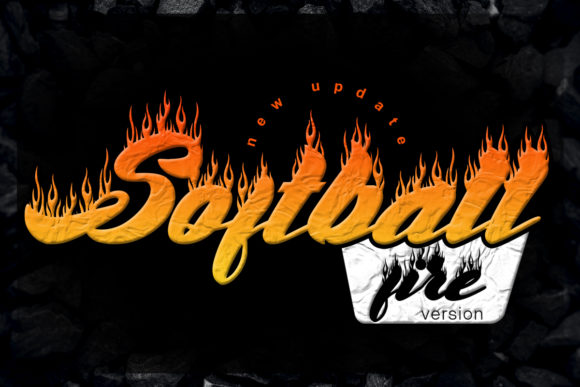
Softball Fire: The Bold Display Font That Commands Attention
When you need to make a statement that sticks, your typography choice carries more weight than most people realize. Softball Fire steps into that space as a decorative typeface built for impact. This isn't the font you reach for body text or lengthy paragraphs—it's the one you choose when a headline needs to land hard, when a logo needs personality, or when packaging needs to jump off the shelf.
At its core, Softball Fire is a display font with a distinctive character. The letterforms carry a bold weight with fluid, slightly exaggerated strokes that suggest movement and energy. There's a warmth baked into its curves, a sense of approachability that balances its commanding presence. Unlike rigid geometric typefaces, Softball Fire brings organic rhythm to the page. The characters have enough flair to feel expressive without tipping into illegibility—a balance that many decorative fonts struggle to achieve.
Where Softball Fire Truly Shines
Think about the last time a piece of packaging caught your eye from across the store. Or when a social media post stopped your scroll. Chances are, the typography played a significant role. Softball Fire thrives in those exact moments—where visual hierarchy matters and first impressions happen fast.
For logo design, this font offers an immediate personality shortcut. Brands targeting younger demographics, lifestyle markets, or entertainment spaces often need type that feels energetic without looking amateur. Softball Fire gives you that polished edge. It works particularly well for food and beverage brands, sports-related ventures, music labels, and any business that wants to project confidence with a playful undertone.
In packaging design, the font's bold weight ensures product names remain readable at varying distances. Whether it's a craft beer label, a boutique candle box, or a snack bag competing for attention on crowded shelves, Softball Fire holds its ground. The decorative qualities add shelf appeal without requiring additional graphic elements to do the heavy lifting.
Social media graphics represent another natural fit. Platforms reward content that grabs attention within seconds. Using Softball Fire for event announcements, sale promotions, quote graphics, or podcast cover art gives your visuals a professional quality that generic system fonts simply cannot match. The font's personality does half the design work for you.
Understanding Its Strengths and Limitations
Every premium font has a sweet spot, and understanding where Softball Fire excels—and where it doesn't—will save you from common design mistakes. As a display font, it performs best at larger sizes. Think headlines, titles, banners, and hero text. When you push it below 18 points, the decorative details start losing clarity, and readability suffers. This isn't a flaw; it's simply how ornamental typefaces work.
For editorial design, consider using Softball Fire sparingly. A magazine cover headline, a pull quote, or a chapter opener could benefit from its energy. But pairing it with a clean sans serif font or a straightforward serif font for body copy is essential. The contrast between a expressive display face and a neutral text face creates visual hierarchy naturally—a principle that experienced designers rely on constantly.
When it comes to font pairing, Softball Fire works best alongside typefaces that don't compete for attention. A geometric sans serif like Montserrat or a humanist option like Open Sans provides breathing room. Avoid combining it with other decorative or script font options unless you have a very specific aesthetic goal. Too much personality in a single layout creates visual noise rather than visual interest.
Practical Considerations for Real Projects
Before committing to any creative font, test it in context. Drop Softball Fire into your actual project file—not just a blank canvas. See how it interacts with your color palette, your imagery, and your existing brand identity guidelines. A font that looks stunning in isolation sometimes clashes with established visual systems.
Check what's included in the font package. Quality display typefaces often come with multiple styles—regular, italic, condensed, or alternate character sets. These variations give you flexibility across different applications without needing additional design assets. Alternates can be particularly useful for avoiding repetitive letter shapes in longer display settings, keeping the visual texture fresh.
Licensing matters more than people realize, especially for commercial use. If you're a small business owner using Softball Fire on merchandise, product packaging, or paid advertising, confirm that your license covers those applications. Most commercial font foundries offer clear licensing tiers—desktop, web, app, and extended options. Reading the terms before purchasing prevents headaches later.
For web design, performance is another factor. Decorative fonts often carry larger file sizes than standard text faces. If you're using Softball Fire only for a hero banner or a single heading, consider loading it selectively rather than sitewide. This keeps your page load times reasonable while still delivering the visual impact you want.
Building Visual Identity with Intentional Typography
Strong brands make deliberate typographic choices. The fonts they use become part of how audiences recognize and remember them. Softball Fire, when applied consistently across touchpoints—business cards, social profiles, packaging, advertisements—creates a cohesive visual thread. That consistency builds trust and recognition over time.
Modern typography isn't about following trends blindly. It's about matching type to message, audience, and context. A fitness brand might use Softball Fire for motivational merchandise. A children's party supply company could leverage it for product headers. A content creator might choose it for branded thumbnail templates. Each application reflects a different audience, but the underlying principle holds: the font serves the communication goal.
For bloggers and publishers, Softball Fire can elevate section headers or featured article titles without requiring a complete redesign. It's an accessible way to refresh existing layouts. Similarly, crafters and hobbyists working on personal projects—greeting cards, invitations, scrapbook pages—can use it to add a professional touch that elevates homemade work into something that feels intentional and polished.
The font's versatility across both digital and print applications makes it a practical addition to any designer's toolkit. From screen to paper, its bold character translates reliably. Just remember to proof at the intended output size and medium before finalizing anything.
Ultimately, Softball Fire is a tool—and like any tool, its value depends on how thoughtfully you use it. Approach it with clear intent, pair it wisely, test it thoroughly, and it becomes a reliable asset for projects that need to make an impression.