Why Cut Out is More Than Just a Trendy Display Font
There’s a particular challenge in modern typography that every designer, marketer, and content creator eventually faces: how do you make text feel tactile in a digital world? We spend our days staring at flat screens, so when we want to evoke a sense of craft, dimension, or raw creativity, we often reach for complex textures or heavy filters. However, the most effective solution is often found in the typeface itself. Enter Cut Out, a display font by Peter Wiegel that solves this problem with elegance and structural integrity.
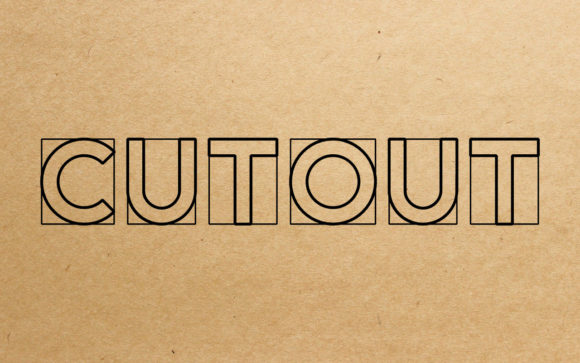
At first glance, Cut Out might look like a standard outline font, but a closer look reveals its true personality. This isn't just a hollow shell; it features letters that appear to have been meticulously sliced from paper or board. The defining characteristic is the "cut" within the counter-spaces and along the strokes, giving the characters a distinct, hand-crafted illusion. It bridges the gap between raw, industrial design and the refined balance required for professional branding. It is a premium font asset that brings a three-dimensional feel to two-dimensional projects.
The Anatomy of a Creative Font
When we talk about the visual weight of a typeface, we are usually discussing thickness. With Cut Out, the conversation shifts to volume. The font creates a sense of space without being heavy. The characters are well-balanced, ensuring that despite the intricate detailing of the "cut" lines, the letterforms remain legible and sturdy. This balance is crucial. Many novelty fonts sacrifice readability for style, but this typeface maintains a harmonious rhythm. It feels like a high-end design asset that belongs in a professional toolkit, rather than a gimmick used only once.
The personality of Cut Out is bold, artistic, and distinctively modern. It doesn't scream for attention through sheer size; rather, it invites the viewer to look closer. In a landscape dominated by flat sans serif fonts and predictable serif font choices, using a display font with this much texture can be a game-changer for visual hierarchy. It establishes a focal point instantly. If you are working on a project that requires a strong voice—whether it's a startup brand identity or a magazine headline—this typeface provides the visual punctuation needed to make that voice heard.
Where to Apply Cut Out for Maximum Impact
The versatility of Cut Out lies in its ability to adapt to various contexts, provided it is used with intention. Because it is a display font, it is not designed for long-form body text. However, its application in short bursts of text can elevate an entire design system. Here is how different creative professionals can leverage this font:
- Logo Design and Brand Identity: For brands that want to project creativity, artisanal quality, or a modern edge, Cut Out offers a unique silhouette. It works exceptionally well for fashion labels, design agencies, or eco-friendly brands that want to highlight a "recycled" or "handmade" aesthetic.
- Editorial Design and Publishing: Magazines and blogs need strong pull-quotes and headers to break up content. Using this typeface for chapter titles or feature headlines adds a layer of sophistication and visual interest that a standard sans serif font simply cannot provide.
- Packaging Design: On a shelf, texture sells. A logo set in Cut Out mimics the physical materials of packaging—paper, cardboard, and tape. It creates an immediate subconscious connection to the product's tangibility.
- Social Media Graphics: In the fast-scroll environment of Instagram or TikTok, you have milliseconds to catch the eye. The outlined, airy nature of this font creates high-contrast graphics that stand out against busy backgrounds or photographs without obscuring the image entirely.
Mastering Font Pairing and Readability
One of the most common mistakes in design is using two competing display fonts. Cut Out demands a partner that complements rather than clashes. Because it has a strong visual personality, it pairs best with neutral, clean typefaces. A classic sans serif font like Helvetica or a modern geometric sans provides a solid, quiet foundation that lets the display font shine. Alternatively, pairing it with a simple script font can create a dynamic contrast between industrial precision and organic flow.
When evaluating project fit, consider the color palette. Cut Out works beautifully as an overlay. You can place it over images, use it as a knockout in a solid color block, or layer it over gradients. The "cutout" nature of the letters allows the background texture or color to become part of the typography itself, which is a powerful tool for web design and digital advertising.
Readability is always a priority. While Cut Out is legible at larger sizes, it is best used for headlines, sub-headers, and call-to-action buttons. Avoid using it for navigation menus or legal disclaimers where clarity is paramount. If you are using it for a logo, ensure the brand name isn't too long; short, punchy names work best with this style to maintain the visual integrity of the "cut" details.
A Practical Guide to Implementation
Before integrating Cut Out into your next project, take a moment to review the technical details. As a commercial font, it comes with licensing options that typically cover both personal and commercial use, which is essential for entrepreneurs and small business owners building a brand. Always verify the license to ensure it covers your specific application, whether that is a website, a printed brochure, or merchandise.
Testing is key. Before finalizing a design, mock up your text in different sizes and against various backgrounds. How does the "cut" effect render on a dark mode background versus a light mode? Does it maintain its charm when scaled down for a mobile view? These practical checks ensure that the font performs as well technically as it does aesthetically.
Ultimately, Cut Out is more than just a set of characters; it is a design statement. It tells your audience that you value craft, that you pay attention to details, and that you are not afraid to stand out from the sea of standard typography. By adding this creative font to your collection, you gain a versatile tool capable of transforming flat ideas into dynamic, engaging visual stories.