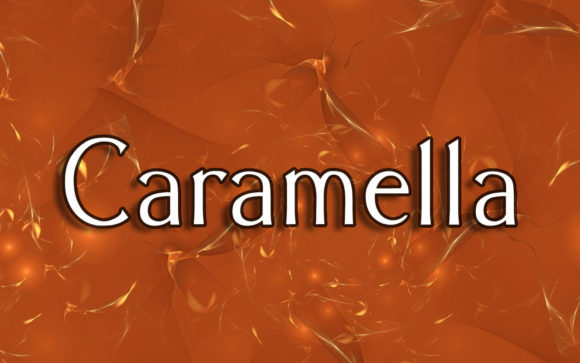
Caramella: The Go-To Serif for Modern Creators
In a world saturated with digital noise, sometimes the most powerful design choice is one that feels both familiar and fresh. That’s the quiet strength of Caramella, a serif font that masterfully bridges the gap between classic elegance and contemporary simplicity. It’s not a font that shouts for attention; instead, it earns it through clean lines, balanced proportions, and an inherent versatility that makes it a true workhorse for a vast array of projects. Designed with the modern creative in mind, Caramella offers a refined aesthetic without the pretension, making it an invaluable asset in any designer's toolkit.
Understanding Caramella's Quiet Confidence
At its core, Caramella is a premium font characterized by its moderate contrast and well-defined serifs. The letterforms are crisp and legible, avoiding the extreme thick-thin strokes of a Didot or the heavy, bracketed serifs of a traditional slab serif. This careful design gives it a personality that is both professional and approachable. It feels trustworthy and established, yet it doesn’t carry the stuffiness of older, more ornate typefaces. Think of it as the tailored blazer of the font world—appropriate for a business meeting, a creative studio, or a casual dinner. Its simplicity is its superpower, allowing it to adapt seamlessly to the tone of your content rather than overpowering it.
A Typeface for Every Occasion
The true test of any creative font is its real-world application. Caramella excels here, proving its worth across a surprising range of mediums. For editorial design, its clarity makes it a superb choice for body text in magazines, books, and reports, ensuring long-form content remains readable and engaging. In the realm of logo design and brand identity, Caramella provides a foundation of credibility. It’s the kind of typeface that can anchor a luxury brand’s packaging or lend a sense of refined stability to a startup’s visual language. Its clean structure also translates beautifully to web design, where screen readability is paramount. As a display font for headlines, it commands attention without sacrificing legibility.
Beyond the digital screen, Caramella’s charm shines in print. It’s a fantastic choice for packaging design, especially for gourmet foods, artisanal goods, or cosmetics, where a touch of understated elegance can elevate the product. For crafters and hobbyists, this font is a revelation. Creating personalized greeting cards, wedding invitations, or custom planners becomes an exercise in style. The font’s inherent neatness ensures that even handcrafted projects look polished and intentional. Marketers will find it invaluable for creating professional social media graphics, presentation decks, and email newsletters that need to look crisp and authoritative.
Integrating Caramella into Your Design Workflow
Choosing the right font is a strategic decision that influences more than just aesthetics. When you select Caramella, you’re making a choice that affects readability, visual hierarchy, and ultimately, audience engagement. Its balanced x-height and clear letter spacing guide the reader’s eye naturally, making complex information feel more digestible. This is crucial for publishers, bloggers, and content creators who need to hold attention in a fast-scrolling environment. A consistent use of Caramella across touchpoints—from your website to your business cards—builds brand recognition and communicates a cohesive, professional image.
Practical Tips for Font Pairing and Use
To get the most out of Caramella, consider its relationships with other fonts. As a versatile serif, it pairs beautifully with a wide range of sans serif fonts. For a clean, modern look, try pairing Caramella for headings with a geometric sans serif like Montserrat or a humanist sans serif like Open Sans for body text. This contrast creates a clear hierarchy while maintaining a harmonious aesthetic. If you’re aiming for a more dynamic or expressive feel, Caramella can also hold its own alongside a subtle script font or handwritten font used for accents or pull quotes. The key is to let Caramella be the steady, reliable foundation.
Before committing to a project, always test the font in context. View Caramella at the sizes it will be used—both large for headlines and small for body copy. Check its performance in both light and dark color schemes. Review the full character set; a quality commercial font like Caramella often includes stylistic alternates, ligatures, and multiple weights (such as Regular, Bold, and Italic) that offer greater design flexibility. These additional styles are not just extras; they are essential tools for creating nuanced visual hierarchy and adding subtle personality to your layouts.
Finally, ensure you understand the licensing. Caramella is a professional design asset, and its license will specify how it can be used—whether for personal projects, commercial client work, or embedded in digital products. Respecting the license protects your work and supports the type designers who create these valuable tools. By thoughtfully integrating Caramella into your projects, you’re not just picking a font; you’re adopting a reliable partner that will help elevate your designs, strengthen your messaging, and connect with your audience on a more polished level. It’s a small detail that makes a significant difference.